A helmet that is too tight affects concentration and increases the risk of headaches on the road. Some manufacturers admit a tolerance margin of a few millimeters during the production of shells, which can impact final comfort. However, safety standards require a precise fit, but they do not prohibit adapting the helmet to the morphology, as long as the protective structure is never altered.
Adjusting protective equipment is not just about comfort: poor support risks compromising safety. Practical solutions exist to improve ergonomics without undermining the primary function of the helmet.
Helmet too tight: what risks for the comfort and safety of the rider?
A motorcycle helmet that is too tight does not just squeeze a little too hard: it turns every kilometer into a trial. Constant pressure on the temples, red marks that do not fade, migraines that set in, sometimes even tingling from cutting off circulation. From the very first moments, discomfort takes over and ends up being distracting. The French Motorcycle Federation warns: prolonged wearing of an ill-fitting helmet harms vigilance, a lapse that can be costly on the road.
But comfort is not the only thing that suffers. A poor fit has direct consequences on safety. If too small, the helmet compresses the skull; if too large, it floats and the head is no longer well supported. The result: the EPS (expanded polystyrene) shell absorbs shocks less effectively, the chin strap or the chin guard can move or give way at the worst moment. The risk of displacement, even ejection, increases during a fall.
The ECE 22.06 standard emphasizes precision: the helmet must be the right size, neither too loose nor too tight. A well-fitted model promotes ventilation, limits noise and vibrations, and reduces fatigue in the cervical area. If the vise tightens, there are several tips for a too-tight motorcycle helmet that allow you to adjust your equipment without compromising safety. Choosing a suitable helmet also extends its lifespan: adapting it upon purchase, replacing the inner foams when they sag, regularly checking the structure and accessories. A well-fitted helmet ensures you are protected and at ease on every ride.
7 practical tips to widen a motorcycle helmet without damaging it
To adapt a too-tight motorcycle helmet without risking its effectiveness, several simple or more advanced methods are available.
Here are the most suitable solutions for this problem:
- Change the inner foams: Most modern helmets allow for the removal and replacement of foams. Manufacturers often offer several thicknesses to fit each morphology. With use, the padding compresses: this is an opportunity to choose a more comfortable density and optimize the interior space.
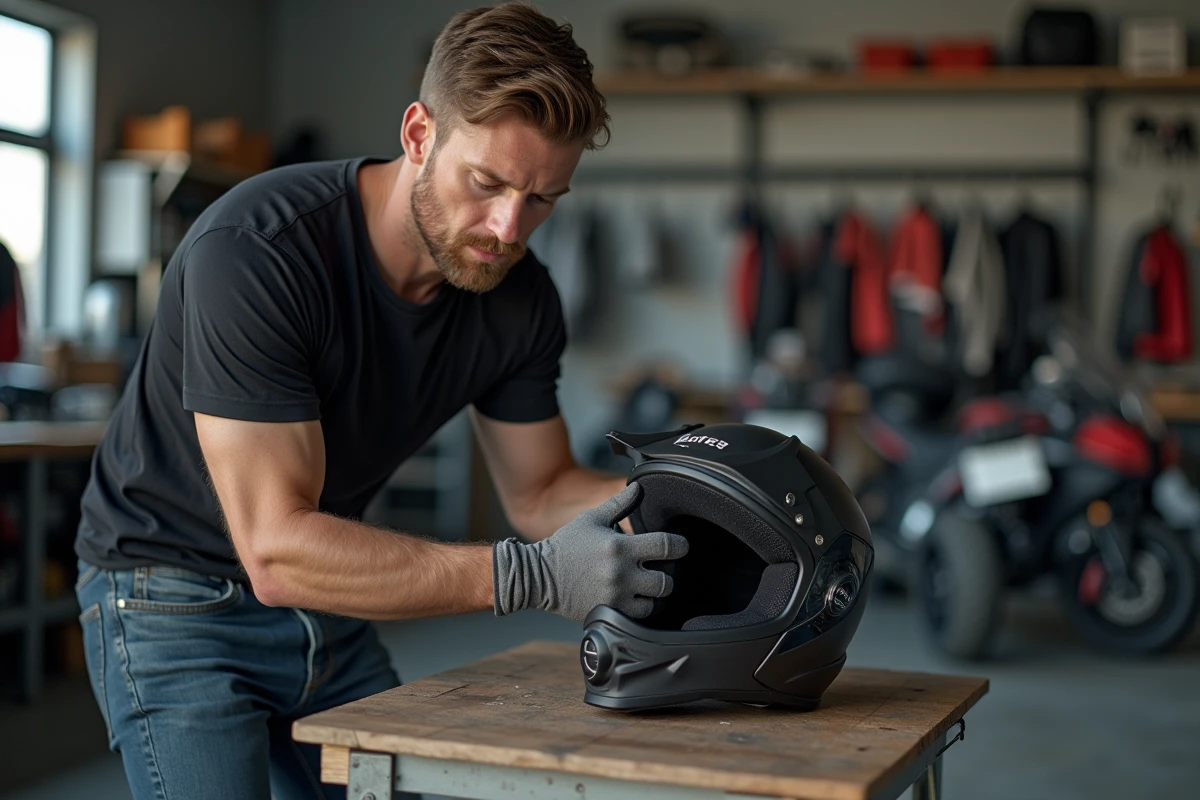
- Use manual pressure: Place the helmet on a flat surface, slide in a rolled towel or a bag of clothes, and let it rest for several hours. This gentle pressure helps to slightly relax the foams, particularly effective on a new helmet.
- Take advantage of body heat: By wearing the helmet at home for half an hour to an hour per session, the interior gradually softens thanks to heat and sweat, without altering the protective shell.
- Opt for memory foam or custom foams: Some brands offer evolving foam technologies or foams made from a 3D scan of the skull. This more expensive solution ensures a nearly surgical fit, ideal for atypical morphologies.
Always monitor the condition of the foams: when they become too soft or compressed, it is time to replace them. Worn-out foams no longer provide adequate protection and can reduce the lifespan of the helmet.

Choosing the right motorcycle equipment to avoid discomfort and ride with peace of mind
The choice of a motorcycle helmet begins before getting on the bike. Measure your head circumference precisely: a simple flexible tape, placed just above the eyebrows, will give you the correct measurement. Compare it with the manufacturer’s size guide: each brand has its own criteria, and a size M from one does not always equal an M from another. A poorly sized helmet will never fit perfectly, even with the best tips.
Take the time to try on the helmet for several minutes. Assess the pressure on the cheeks, neck, and forehead. Move your head, simulate movements as if you were on the road: the fit should be firm but never painful or uncomfortable. If you wear glasses, check their fit and comfort. Choose the type of helmet (full-face, modular, open-face) according to your habits: city, highway, hot or cold season. Ventilation also plays a role: in winter, combining it with a balaclava or a skull cap can make a difference.
Remember to replace your helmet every 5 to 7 years, or as soon as a significant impact occurs. Regularly inspect the chin strap, the foam, and the shell. A simple scuff, a weakened buckle, should alert you. Clean the interior with mild products, store your equipment away from moisture and heat sources. These actions extend the lifespan of your helmet and ensure it remains reliable, ready to protect you without fail.
We do not compromise on safety. A well-fitted, well-maintained helmet becomes an ally on every journey: it becomes forgettable, but in case of an unforeseen event, it will always be there to fulfill its role. The road does not wait, so it’s best to approach it with a helmet that meets your demands.