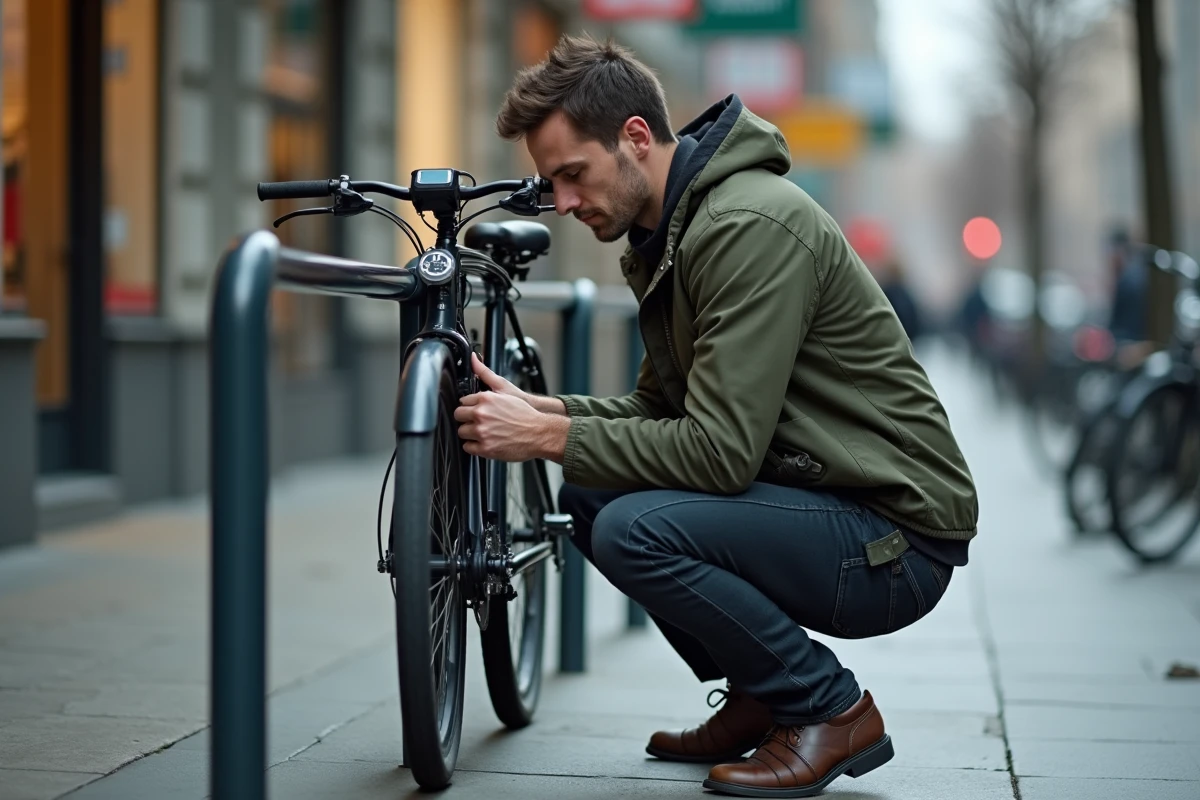
The theft of bicycles remains a daily concern for urban cyclists. In the face of this risk, changing the code of your Decathlon lock seems like a logical reflex. The mandatory marking of new bicycles in France, effective since 2021, has not eliminated thefts, and the question of the actual level of protection offered by a coded lock deserves to be raised even before touching the dials.
Decathlon Cable Lock: A Level of Resistance to Be Put into Perspective
Before detailing the code-changing procedure, a technical point must be made. Cycling associations and specialized insurers now recommend avoiding the coded cable lock as the primary form of protection. The reason lies in common theft methods: cutting pliers, twisting the cable, and trial-and-error decoding of the dials.
A cable, even a thick one, gives way in seconds under a suitable pair of pliers. The combination mechanism of most models sold at Decathlon relies on three or four digits, which limits the number of possible combinations. A patient thief can test all combinations in a few minutes by feeling the mechanical play of each dial.
This does not mean that changing the code is useless. Personalizing your combination prevents an opportunist from trying the factory code (often 0000). Following a Decathlon coded lock user manual remains relevant for this basic action. However, this modification does not change the physical resistance of the cable or the reliability of the locking mechanism.

Changing the Code of a Decathlon Lock: The Concrete Procedure
The method varies slightly depending on the models, but the principle remains the same for most combination locks sold by Decathlon (cable, fine chain, or padlock).
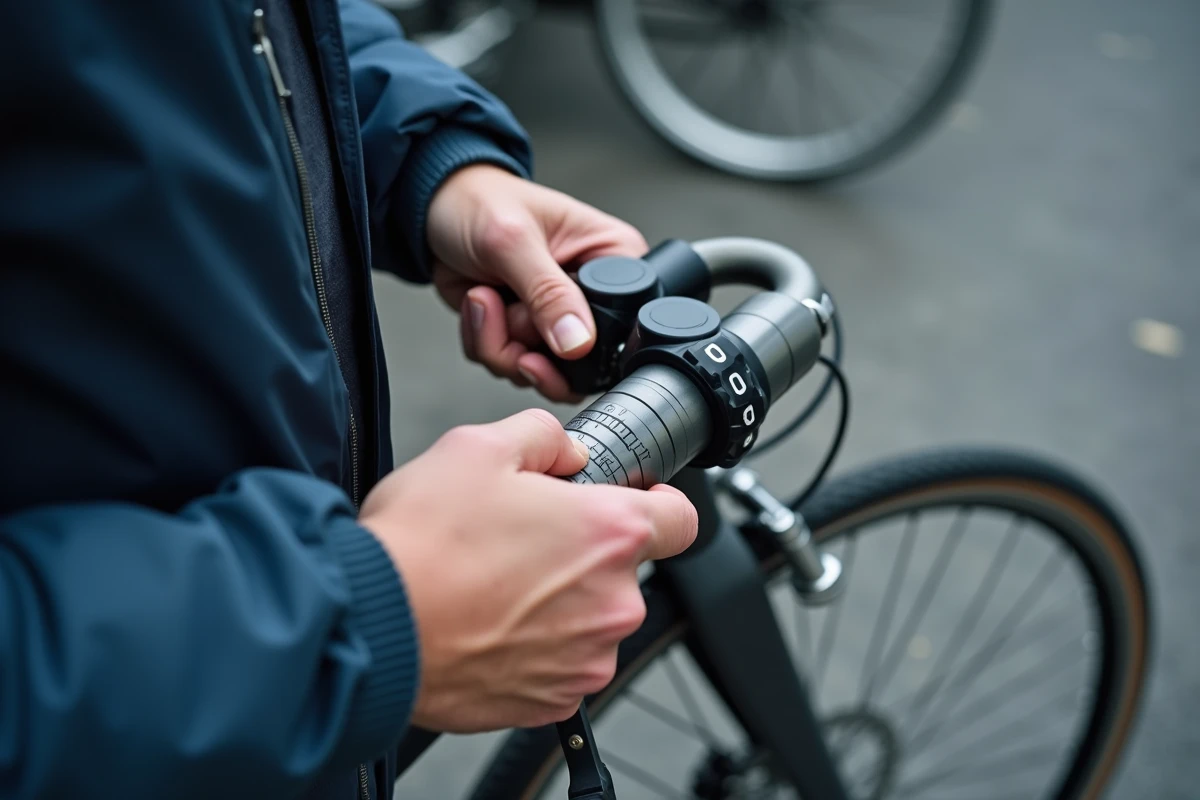
- Open the lock by entering the current code (factory code or previous personalized code), then hold the shackle or reset button in the open position.
- Turn the dials to set the desired new code, avoiding obvious sequences (1234, 0000, birth date).
- Release the shackle or button to lock in the new combination, then test opening and closing several times before using it in the field.
On some models, a small reset button is located on the side of the mechanism. It must be pressed with the tip of a pen during the code change. Each model has its own procedure, and Decathlon’s customer service provides specific sheets by product reference.
Common Mistakes When Changing the Combination
The first source of blockage is releasing the shackle too early, before finishing setting the new code. The mechanism then records a partial or incorrect combination.
The other classic trap: forgetting the new code a few days after changing it. Write it down in a safe place (encrypted notes app on your phone, for example), especially if you do not use your bike every day.
Coded Lock or U-Lock: What Independent Tests Show
The FUB (French Federation of Bicycle Users) classifies locks according to a star system. Recent theft prevention guides, whether from the FUB or local authorities, recommend a U-lock or approved chain rated level 2 or 3 stars by the FUB for parking longer than a few minutes.
Coded cable locks, including those from Decathlon, generally do not appear in the most resistant categories of these rankings. Their role is limited to securing accessories (front wheel, saddle) or very short stops, in addition to a primary lock.
- A good quality U-lock resists cutting pliers and leverage, the two tools most commonly used by thieves.
- An approved chain offers more flexibility in securing than a U-lock, with a comparable level of resistance if the link and padlock are of sufficient caliber.
- A coded cable, even with a personalized combination, remains vulnerable to common cutting tools and mechanical decoding.
The mandatory marking of new bicycles facilitates recovery in case of theft, but it does not replace a physically resistant lock. Combining marking and a quality lock remains the most effective combination according to field recommendations.
Change the Code or Change the Lock: How to Decide
Changing the code of your Decathlon lock is a quick, free action that eliminates the risk associated with the factory code. If your cable lock is only used to secure a wheel in addition to a U-lock, this combination change is sufficient.
If you rely on this cable as the sole protection for a bike parked for more than ten minutes in the city, feedback from the field varies on this point, but the general trend is clear: a coded cable alone does not deter an equipped thief. Replacing it with a U-lock or an approved chain represents a more effective investment than any combination of numbers.
What Budget to Allocate for a More Resistant Lock
U-locks and approved chains are available at an accessible price range at most sporting goods stores. The additional cost compared to a coded cable remains moderate considering the price of a bike, especially when considering that an uninsured theft costs much more than a solid lock.
Changing the code of your Decathlon lock takes less than two minutes and eliminates the risk of the default code. This step remains meaningful for secondary use. For the primary protection of your bike, available data points towards a higher category physical lock, tested by an independent organization like the FUB, rather than a cable whose combination, no matter how personalized, does not compensate for mechanical fragility.