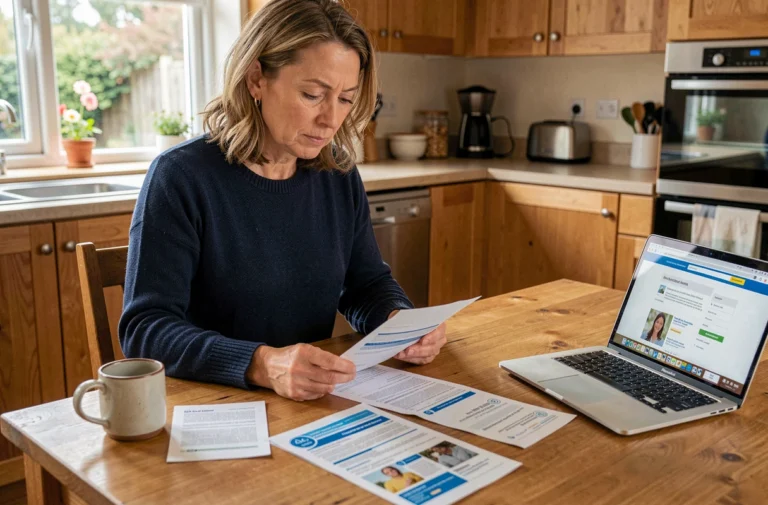
Finding a support center or consultation suited to a specific need involves more than browsing a directory. In France, services dedicated to women cover sexual health, psychological support, housing assistance and legal support for victims of violence. The challenge lies less in whether these resources exist than in how accessible they are in practice: opening hours, waiting times, admission requirements and confidentiality policies vary from one organization to another, sometimes even within the same department.
Check whether a service is actually accessible before making the trip
Most online directories of resources for women list organizations, phone numbers and addresses. They answer the question “where can I go?” but rarely “can this service see me today?”
The official Santé.fr directory provides more detail. Its listings for sexual health centers describe the services offered (contraception, HIV and STI testing, PrEP, abortion support, psychological consultations and vaccination), as well as practical arrangements. Local services vary from one center to another, even among centers in the same city.
A departmental sexual health and testing center, such as the one in Étampes listed on Santé.fr, may offer several of these services in one place, while another may focus solely on contraception.
Before setting out, four checks can help you avoid an unnecessary trip:
- Opening hours and whether you need an appointment, as listed on the Santé.fr page for the center in question.
- Access requirements: some services are limited to residents of a particular area, while others require a referral from a healthcare professional or social worker.
- Cost and coverage: free consultations, third-party payment, additional fees. This information is not always available online, so calling is the most reliable way to find out.
- Actual waiting times, which you can only confirm by contacting the organization directly, as directories do not list them.
For STI testing, you do not always need to go through a gynecological care pathway. Specialized centers are available and listed on Santé.fr and in the Sida Info Service directory.
By exploring the Centre de Femmes Entrelles sitemap, you can view a map of the services offered by this organization, making it easier to identify available support without having to search in multiple places.

Support in cases of violence: understanding the referral process at a hospital facility
Contacting an organization that supports victims of violence can understandably feel daunting. The fear of having to recount your experience to several different people is a documented barrier. Some hospital-based services have structured their intake process to reduce the need to repeat your story.
The Île-de-France Regional Health Agency (ARS) describes the process at Maison Calypso as involving several stages: an initial welcome followed by an interview with a pair of professionals, then a medical, psychological, social and legal assessment. This integrated referral model means that the person seeking support does not have to explain their situation to every new professional.
Not all organizations follow this model. When contacting a service for the first time, three practical questions can help you understand what to expect:
- What happens during the initial meeting, and how many professionals will be there?
- What referrals or support options are available after this first contact (psychological support, legal assistance, emergency accommodation)?
- Is confidentiality guaranteed, and under what circumstances might information be shared with someone else?
Asking these questions by phone before going in person can reduce uncertainty and help you prepare for that first contact.
Housing and emergency accommodation: the limitations of directories
Housing needs are a case where the gap between a listed resource and the support actually available is particularly pronounced. Access to a resource does not mean immediate support is available. Places in emergency accommodation or secure residences for women experiencing violence are limited, and admission times depend on criteria that directories do not specify.
Admission criteria vary by service: administrative status, whether children are present, and the level of danger assessed by a social worker. Some organizations require a referral through 115 or a departmental social services office. Others accept direct applications but maintain a waiting list.
Given this reality, the most effective approach is to ask for three specific details during your first contact: the estimated wait before accommodation can be offered, the admission criteria and temporary options while you wait for a place (temporary hotel accommodation, referral to another organization, emergency financial assistance).
Women’s health in France: combine several directories for reliable results
No single directory lists every service dedicated to women. Santé.fr covers sexual health centers and testing facilities. Maisons des femmes, often affiliated with hospitals, have their own websites. Information centers on women’s and family rights (CIDFF) maintain a separate directory. Local social or legal support organizations may only be listed on local authority websites.

This fragmented landscape means you need to cross-check sources. For sexual health needs, start with Santé.fr. For support related to violence, consult 3919 and the websites of Maisons des femmes. For legal needs, contact a CIDFF. A single need may involve several organizations, and searching by type of service rather than by organization name tends to produce more relevant results.
Platforms such as ResoFemme aim to centralize this information by bringing together themed support pathways. Their usefulness depends on how often the information is updated. An outdated phone number or opening hours that have changed since the last update can make a listing unusable.
Finding a service suited to a woman’s needs remains an active process. Consulting a directory is a first step, not the end of the journey. Calling the organization directly and asking specific questions about waiting times, costs, confidentiality and admission criteria turns general information into real access to support.