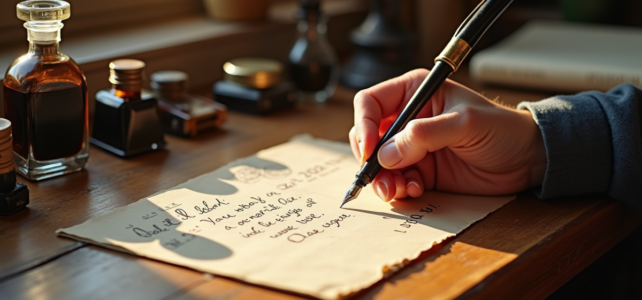
Imagine a smile spreading across the face of a loved one, surprised by a card received in the midst of their daily routine; this is the timeless magic of sending cards. In the digital age where messages are exchanged at lightning speed, the tangible and personal nature of a postcard or greeting card regains its full meaning. It is not limited to simple words written on paper: it is a mark of attention, a personal imprint, a handmade gift that transcends distances. Sending cards, whether intended to celebrate a special occasion or simply to say I’m thinking of you, embody a form of expression that persists despite the dematerialization of exchanges.
The origins and evolution of sending cards
Dive into the fascinating history of sending cards, from their earliest uses to their contemporary popularity, to understand how they have adapted to different eras and technologies.
The earliest forms of cards date back several centuries. Ancient civilizations used clay tablets to communicate important messages. With the arrival of paper, these tablets gave way to more refined writings. The tradition of greeting cards, for example, took off in the 19th century with the industrialization of printing. Cards became a popular means of conveying greetings and wishes, especially during holidays.
Over the decades, various innovations have transformed cards. The emergence of new printing techniques has improved the quality and variety of designs. Renowned artists and graphic designers began to add their personal touch, turning cards into true works of art. Today, despite the competition from digital messages, sending cards continues to evolve, sometimes incorporating technological elements such as QR codes or audio messages.
Why sending cards are still so cherished
Sending cards hold a special place in our hearts and customs due to their unique ability to create lasting and authentic connections.
- Personal touch: Writing a card involves effort and intention that deeply touches the recipient. The choice of a card, the time taken to write a sincere message, all reflect special attention.
- Tangible keepsake: Unlike digital messages, a card can be kept, displayed, and rediscovered. It becomes a memorial object that transcends time.
- Emotional value: Handwritten words convey emotions in a way that digital communications cannot match. They carry a warmth and authenticity that the virtual world lacks.
Choosing and customizing your sending card
The customization of sending cards has never been easier and more varied, allowing everyone to unleash their creativity to create a unique message.
There are a multitude of options for personalizing a sending card. Many online services offer a plethora of designs and templates for all occasions. Whether it’s a birthday card, a thank-you card, or simply to say hello, the possibilities are endless. Users can add photos, illustrations, or even personal quotes that reflect their relationship with the recipient.
Modern printing techniques also allow for the incorporation of special finishes such as embossing or laser cutting. Each element contributes to making the card a unique and memorable object. By carefully choosing patterns and messages, one creates an emotional experience that will deeply touch the recipient.
For those who prefer a more traditional approach, creating a card by hand remains an option. Using materials such as colored cardstock, inks, and markers allows for exploring a vast creative palette. Each card thus crafted becomes a unique piece, reflecting the affection and attention given to its creation.