
Carpooling is gradually establishing itself as a transport solution that is both economical and ecological. By sharing rides, users not only share travel costs but also reduce their carbon footprint. This practice helps to ease road congestion and decrease air pollution.
In France, certain infrastructures particularly promote this trend. For example, dedicated carpooling areas, such as those around major urban areas, facilitate secure meeting points. Digital platforms, such as BlaBlaCar, also provide a simple and effective interface, making carpooling accessible to everyone.
The benefits of carpooling
Carpooling relies on the shared use of a vehicle by a non-professional driver with a passenger. This practice, different from public transport, offers several tangible benefits.
Financial savings
One of the major advantages of carpooling lies in the reduction of travel costs. By sharing expenses, drivers and passengers achieve substantial savings. These financial exchanges are limited to sharing costs, making carpooling accessible to a wide audience.
- Increased purchasing power for users
- Reduced public costs for communities
Reduction of pollution
Carpooling significantly contributes to the reduction of greenhouse gas emissions. By decreasing the number of individual vehicles on the roads, this practice promotes better air quality and contributes to energy efficiency. The community thus benefits from a decrease in air pollution and urban congestion.
Territorial solidarity
By facilitating travel, especially in rural and peri-urban areas, carpooling strengthens territorial solidarity. Infrastructures such as the Vinci Autoroutes carpooling parking in La Chapelle-Saint-Mesmin illustrate this dynamic by providing secure and accessible meeting points.
Legislative environment and incentives
The National Daily Carpooling Plan, launched by the government, aims to triple the number of carpooling trips by 2027. This program, supported by measures such as the sustainable mobility package (FMD), encourages private sector employees and public service agents to adopt less polluting mobility options. 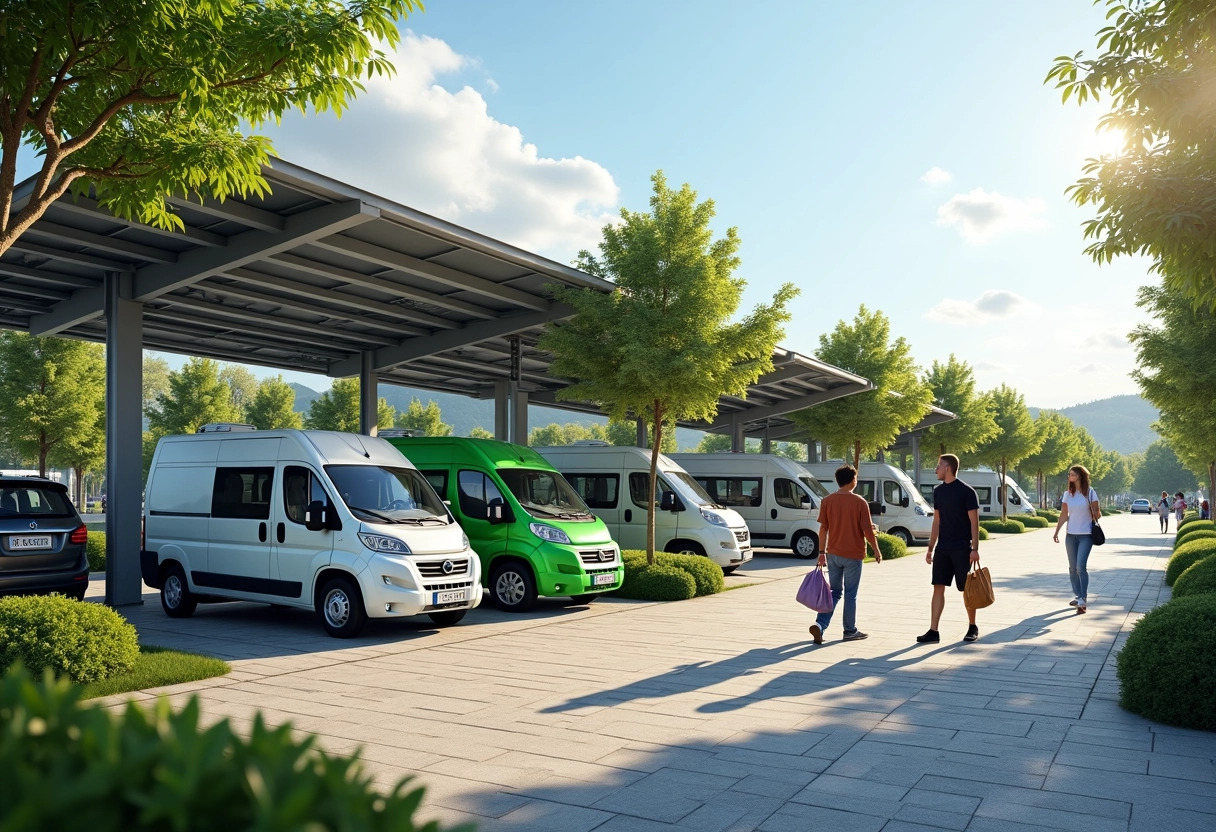
The best carpooling infrastructures in France
The rise of carpooling in France relies on dedicated infrastructures that facilitate travel and optimize the user experience. Among these infrastructures, some stand out for their efficiency and accessibility.
Carpooling lanes
The carpooling lanes, particularly present around major urban areas, help to smooth traffic and promote shared mobility. These lanes, often located on the most congested routes, provide valuable time savings for drivers and passengers.
- A48 motorway between Lyon and Grenoble
- A10 motorway in the Paris region
Carpooling parking lots
The carpooling parking lots play a fundamental role in this dynamic. Located in strategic locations, they provide secure spaces for carpoolers to meet. The Vinci Autoroutes carpooling parking in La Chapelle-Saint-Mesmin, for example, is a model of well-thought-out infrastructure, integrated into a larger transport network.
| Name | Location | Capacity |
|---|---|---|
| Vinci Autoroutes Parking | La Chapelle-Saint-Mesmin | 200 spaces |
| Lyon Station Parking | Paris | 150 spaces |
Matching platforms
The carpooling operators also play a pivotal role. Apps and dedicated websites facilitate connections between drivers and passengers, making carpooling more accessible and secure. These platforms integrate innovative features to optimize trips and ensure energy efficiency.
The National Carpooling Observatory indicates a strong increase in completed trips, proof of the effectiveness of these infrastructures and the growing adherence of users.
These infrastructures and measures, constantly evolving, illustrate France’s commitment to promoting sustainable and responsible mobility.