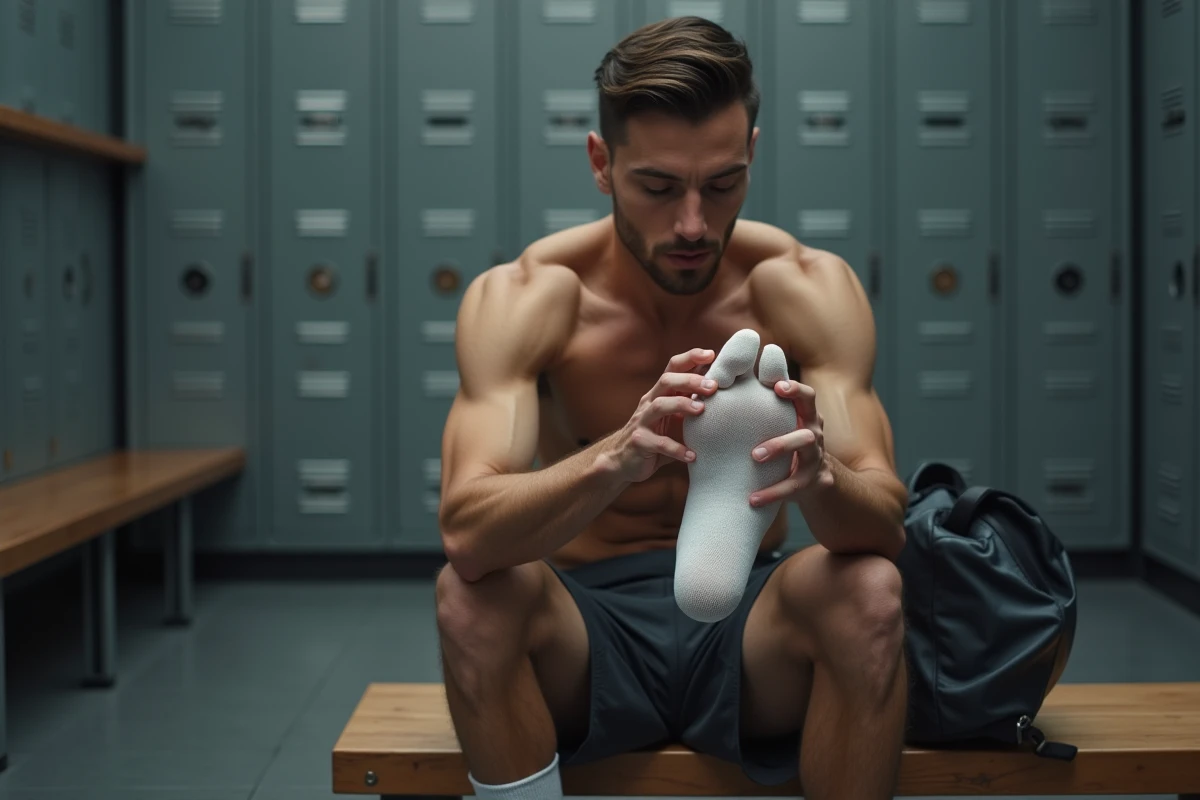
After a long run or a hiking session, the callus under the foot often takes a back seat. Calluses on the feet of athletes result from a defense mechanism of the skin, which thickens where friction and pressure are repeated. Ignoring this natural reaction often leads to pain, cracks, or blisters that disrupt training.
Functional callus in athletes: why not remove it all
An aggressive scraping with a metal rasp weakens the skin to the point of promoting the appearance of blisters in the next training session.
An observational study conducted on trail runners in 2022-2023 highlighted more skin lesions in those who used metal rasps and deep scraping. Runners who limited themselves to light weekly thinning with a pumice stone or fine file had fewer blisters and micro-tears.
The concept behind this finding is called functional callus. It is a thin layer of callus that protects the skin against repeated impacts. The goal is not to achieve a smooth foot like before the season, but to maintain sufficient thickness to absorb shocks without creating a rigid area that cracks.
As detailed in the article from J’améliore ma Santé, trail runners and long-distance runners are particularly exposed to this trap: too much abrasive care weakens the skin instead of strengthening it.
Specific causes of calluses on feet related to sports practice
Calluses (or hyperkeratosis) do not appear randomly. They form on areas of the foot that undergo the most mechanical stress. In athletes, three factors almost always combine.
Ill-fitting sports shoes
A shoe that is too tight compresses the toes and generates lateral friction. If too loose, it allows the foot to slide, causing calluses under the forefoot and heel. The choice of shoe size must take into account foot swelling during exertion, which can reach half a size larger during long runs.
Inappropriate socks and humidity
Cotton socks retain moisture. The softened skin rubs more, which accelerates callus formation in response. Technical socks made of synthetic fibers or merino wool wick moisture away better and reduce this mechanism.
Cycle of sedentary behavior and intense effort
Several sports medicine teams have reported since 2022 an increase in cases of painful calluses related to teleworking among athletes. Sedentary behavior during the day (feet flat, without movement) followed by intense effort in the evening creates a mechanical contrast that the skin compensates for with rapid thickening. This sedentary-intense effort pattern accelerates the formation of painful calluses.
Preventive foot care for athletes: the weekly protocol
Preventing calluses does not require an arsenal of products. A simple ritual, repeated each week, is enough to keep feet functional.
- Gentle thinning once a week: after a ten-minute warm foot soak, use a pumice stone or a ceramic file on the thickened areas, without insisting until the skin is pink. The goal is to reduce the excess, not to remove the protective layer.
- Targeted daily hydration: apply a urea-based cream on the heels and forefoot after showering. Urea softens the cornified layer and slows its excessive reformation.
- Regular inspection of the toes: check for the presence of corns between the toes (called seed corns), often masked by socks. These lesions, if infected, require a break from sports.
- Thorough drying between the toes after each training session, to limit fungi that weaken the skin and promote thickening.

Foot care check before competition: what ultra runners do
Modern training protocols now include specific podiatric care before major events. Recommendations for preventing skin injuries in runners advocate for a preventive reduction of calluses by a podiatrist 7 to 10 days before the race.
This timeframe is not arbitrary. It allows the skin to heal and reform a thin protective layer before the day of the event. Care too close to the competition leaves the skin vulnerable to blisters.
What the podiatrist checks during the pre-race assessment
Beyond the callus, the practitioner examines the nail cutting (a nail that is too long or poorly trimmed causes subungual hematomas), the alignment of the toes, and the presence of pressure points. They may place temporary orthotics to redistribute pressure on weakened areas.
This type of assessment, once reserved for elite athletes, is becoming more common in podiatry practices. If you are preparing for a marathon or a trail over 40 kilometers, a podiatric appointment is part of the preparation just like the last long run.
Curative treatments when the callus becomes painful
When calluses are already thick, cracked, or painful, home care is no longer sufficient.
Keratinolytic dressings containing salicylic acid soften the callus locally. They are applied directly to the corn for several days. This approach works well on moderate calluses, but it does not correct the mechanical cause.
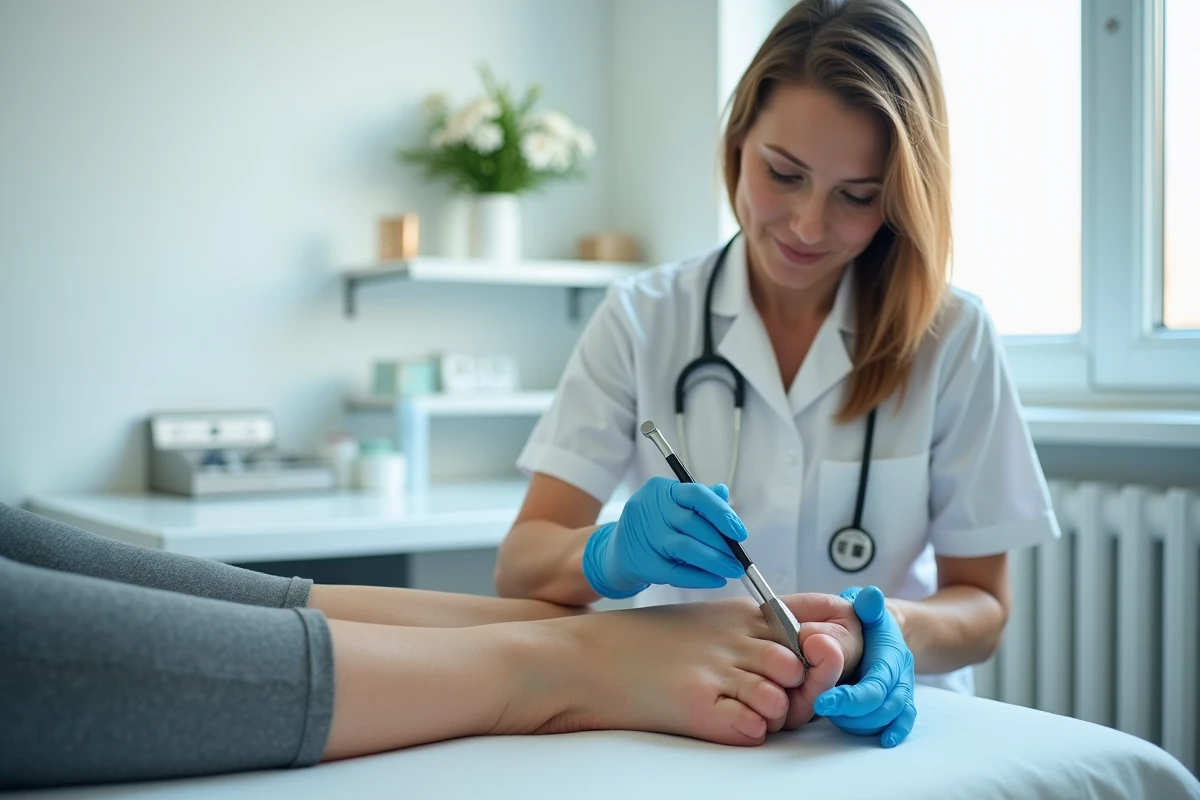
A deep corn or a bleeding crack requires a podiatric consultation. The practitioner removes the callus with a scalpel in a controlled manner, without reaching the sensitive layers. It is a painless, precisely calibrated gesture, very different from home scraping.
For diabetic athletes or those suffering from arteritis, care must be exclusively professional. The delayed healing in these patients turns a simple callus into an infectious entry point.
Foot care in athletes relies on a balance: keeping enough callus to protect the skin, while removing just enough to avoid cracks. Regular maintenance, adapted to the training load, remains the best protection against skin injuries that can lead to days lost from running.