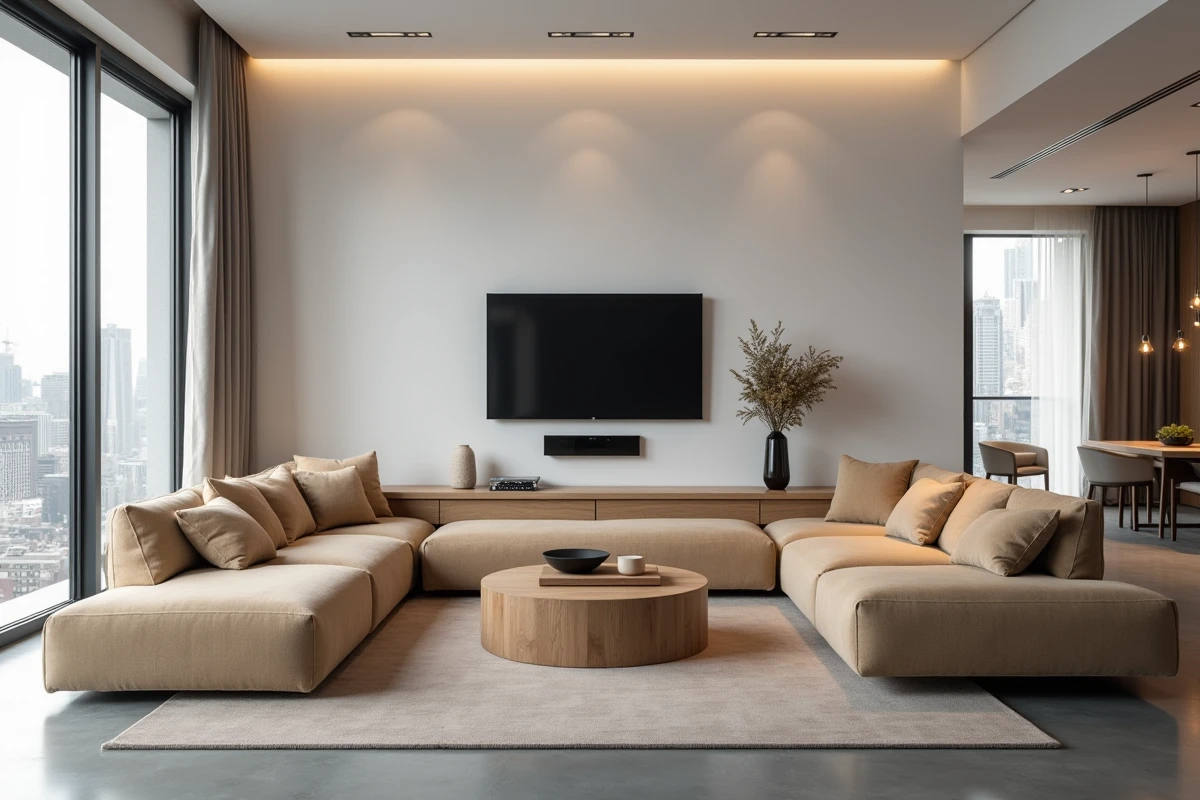
The residential equipment market in France is undergoing an accelerated technical transformation. Thermal regulations, rising energy costs, and the democratization of connected objects are reshaping what a home must integrate to remain functional in the long term. Far from just aesthetic considerations, equipment for a modern home in 2024 must meet measurable constraints: consumption, indoor air quality, and adaptability of living spaces.
Energy Management and Flexibility of Electrical Demand
Since 2023, several French energy suppliers have been offering plans that include remote management of domestic equipment. EDF, with its Tempo and Mes Jours Zen plans, and Engie with its super off-peak hour contracts, encourage the installation of thermostats, hot water tanks, and charging stations capable of shifting consumption outside of peak times.
The principle is based on controlled load shedding: the occupant programs comfort scenarios, and the system automatically adjusts the demand on devices according to pricing signals. The Energy Regulatory Commission (CRE) documented this rise in demand flexibility in its July 2023 report.
This type of management changes the criteria when choosing a thermostat or a water heater. A device compatible with these flexibility protocols does not necessarily cost more, but its ability to receive remote instructions becomes a distinguishing factor. To explore the equipment offered by Salon Tendances Habitat, this compatibility is one of the filters to consider before any purchase.
Indoor Air Quality: Niche Sensors Becoming Common
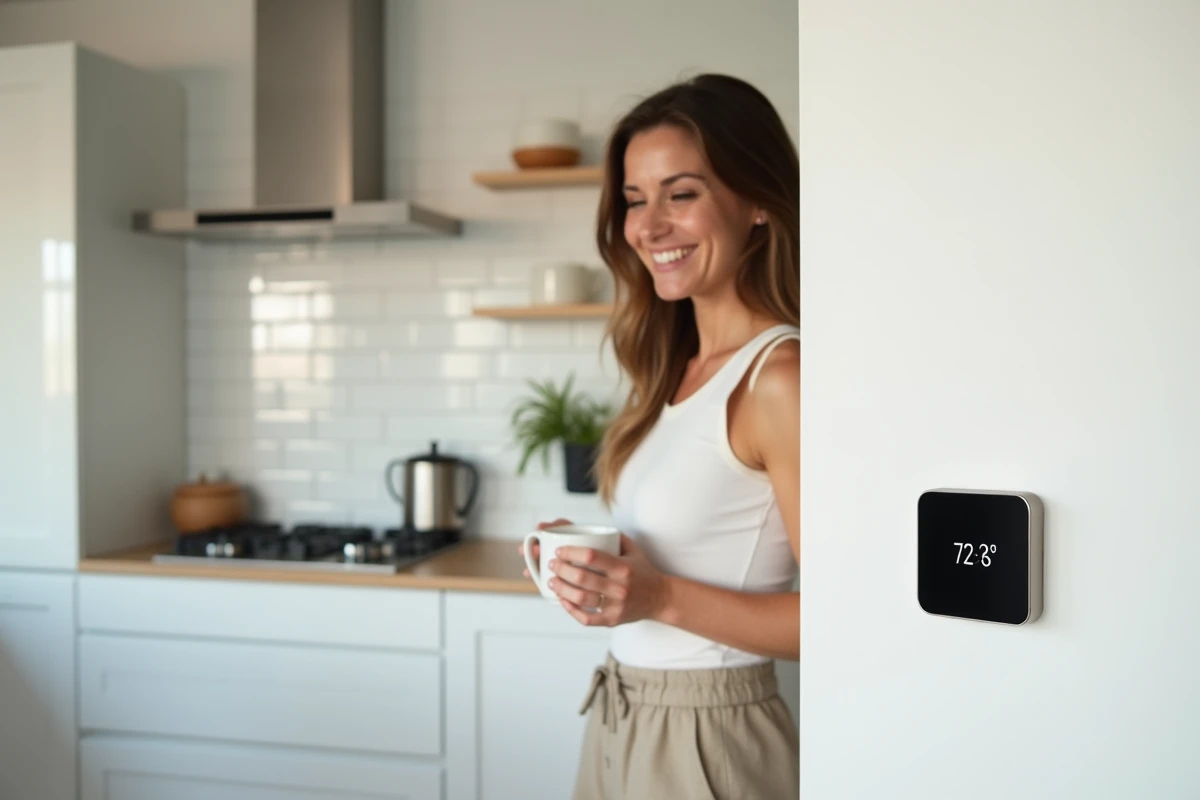
The Indoor Air Quality Observatory reports a growing adoption of permanent monitoring solutions in new and high-end renovated homes. This includes CO₂ sensors integrated into ventilation systems, connected purifiers, and hybrid ventilation systems that combine natural and mechanical airflow.
The reason is technical. Highly insulated homes (RE2020, high-performance renovations) retain heat, but also pollutants: CO₂, volatile organic compounds (VOCs), fine particles. Without appropriate air renewal, thermal gain comes at the cost of respiratory discomfort.
Hybrid Ventilation and Dual-Flow Ventilation Systems
The dual-flow ventilation system recovers heat from outgoing air to preheat incoming air. It reduces thermal losses associated with ventilation. Recent models incorporate sensors that adjust the airflow based on the CO₂ levels measured in each room.
Hybrid systems alternate between natural ventilation (when outdoor conditions allow) and mechanical extraction. They consume less electricity than a permanent ventilation system. Field reports vary on this point: some installers report superior acoustic comfort, while others highlight implementation challenges in older buildings.
- CO₂ and VOC sensors enable real-time control of ventilation flow, preventing over-ventilation in winter.
- Connected purifiers filter fine particles and alert the occupant when air quality deteriorates.
- Hygro-regulated dual-flow ventilation systems remain the standard in common renovations, with a well-documented cost-effectiveness ratio.
Biosourced Materials in Interior Renovation
Wood, linen, hemp, and cellulose wadding are gaining ground in interior renovation projects. Their appeal goes beyond aesthetics: these materials naturally regulate ambient humidity, a parameter often overlooked in the comfort of a living space.
A wood fiber insulation, for example, absorbs and releases water vapor according to the room’s hygrometric variations. The result is a perceived thermal comfort that is more stable than with a synthetic insulation of equivalent thermal resistance. The sensation of cold walls decreases, which sometimes allows for a reduction in the heating setpoint temperature.
Limitations to Know Before Choosing
Biosourced materials come with constraints. Their implementation requires expertise in managing water vapor within walls (vapor barriers, vapor retarders). Poor sizing can lead to internal condensation, degrading the insulation within a few years.
The cost of biosourced materials remains higher than that of conventional insulations. Available data do not allow for a conclusion that the gap is uniformly narrowing across the market, even if the general trend is moving in that direction with increasing production volumes.
Kitchen and Living Room: Rethinking Layout Through Equipment
The open kitchen to the living room has become a standard in house and apartment projects. This configuration imposes specific equipment choices. The perimeter extraction or silent recycling hood is gradually replacing classic models, which are too noisy for an open living space.
On the lighting side, light is considered in layers. A central ceiling light is no longer sufficient. Designers combine functional lighting (worktop), ambient lighting (dimmers, LED strips with adjustable temperature), and natural light optimized by the choice of light wall coverings.
Custom furniture is progressing in renovation projects. Cabinets tailored to the centimeter allow for the exploitation of corners, slopes, or short runs. This approach consumes more budget than standard furniture, but it transforms lost square meters into functional storage.
Residential Home Automation: What Works and What Remains Fragile
The communication protocols between connected devices have solidified. The Matter standard, supported by major manufacturers, promises interoperability between brands. In practice, adoption remains gradual, and field reports vary on the reliability of gateways between old and new devices.
The most mature scenarios concern heating (connected thermostats), lighting (controllable bulbs), and security (detectors, cameras). Centralized energy management systems, which aggregate solar production, battery storage, and domestic consumption, represent a growing segment but are still reserved for new construction or major renovation projects.
- A connected thermostat compatible with flexible pricing offers is the first profitable home automation investment.
- Motorized roller shutters, controlled according to sunlight, reduce summer overheating without air conditioning.
- Connected locks and IP video intercoms are becoming more common, with prices steadily decreasing over the past two years.
The issue of software aging remains open. A connected device whose manufacturer stops updates becomes a security vulnerability or an orphaned device. Checking the manufacturer’s support policy before purchase is a precaution that is too rarely applied.