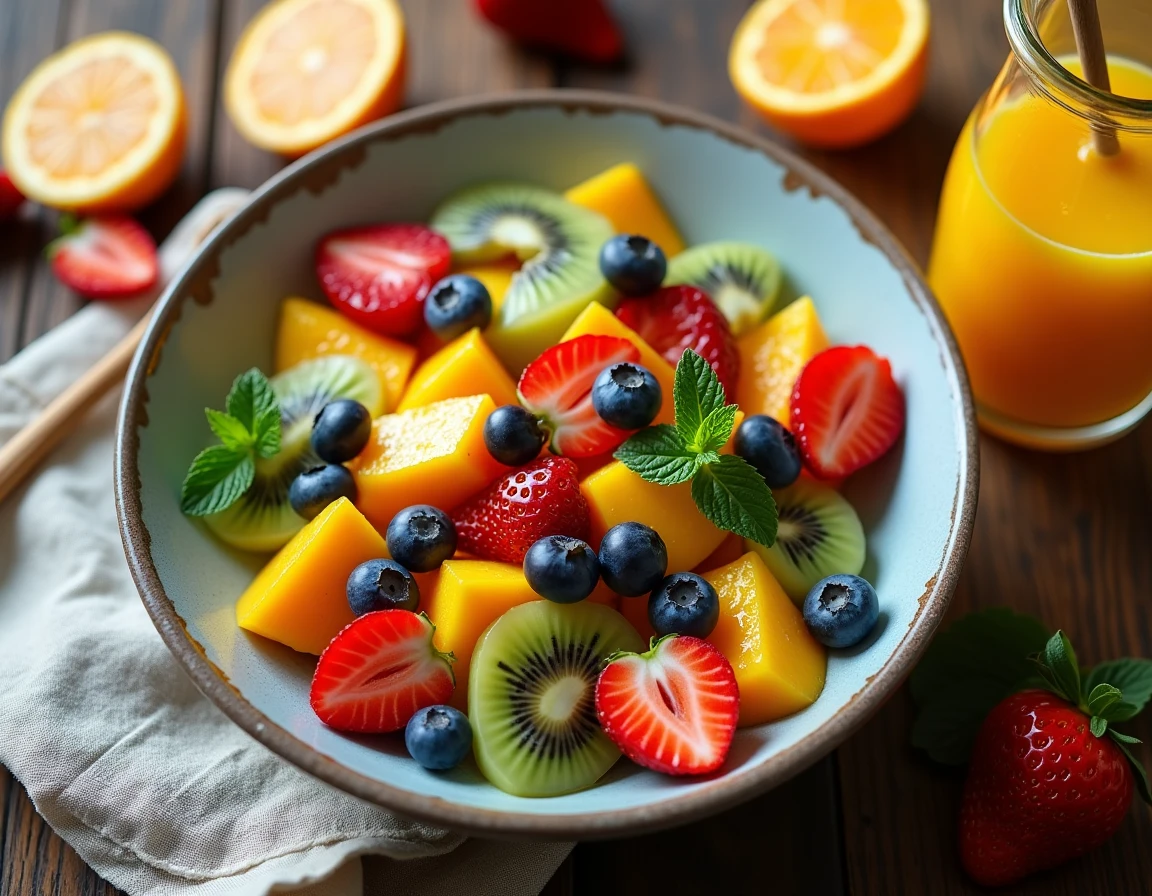
Between freshly squeezed lime juice and diluted cane sugar syrup, the liquid poured over a fresh fruit salad radically changes the final result. Acidity, sweetness, longevity: each option affects the texture and flavor of the fruits differently. Comparing these liquids based on measurable criteria allows for informed choices rather than habitual ones.
Acidity, sugar, and oxidation: what each juice changes in the bowl
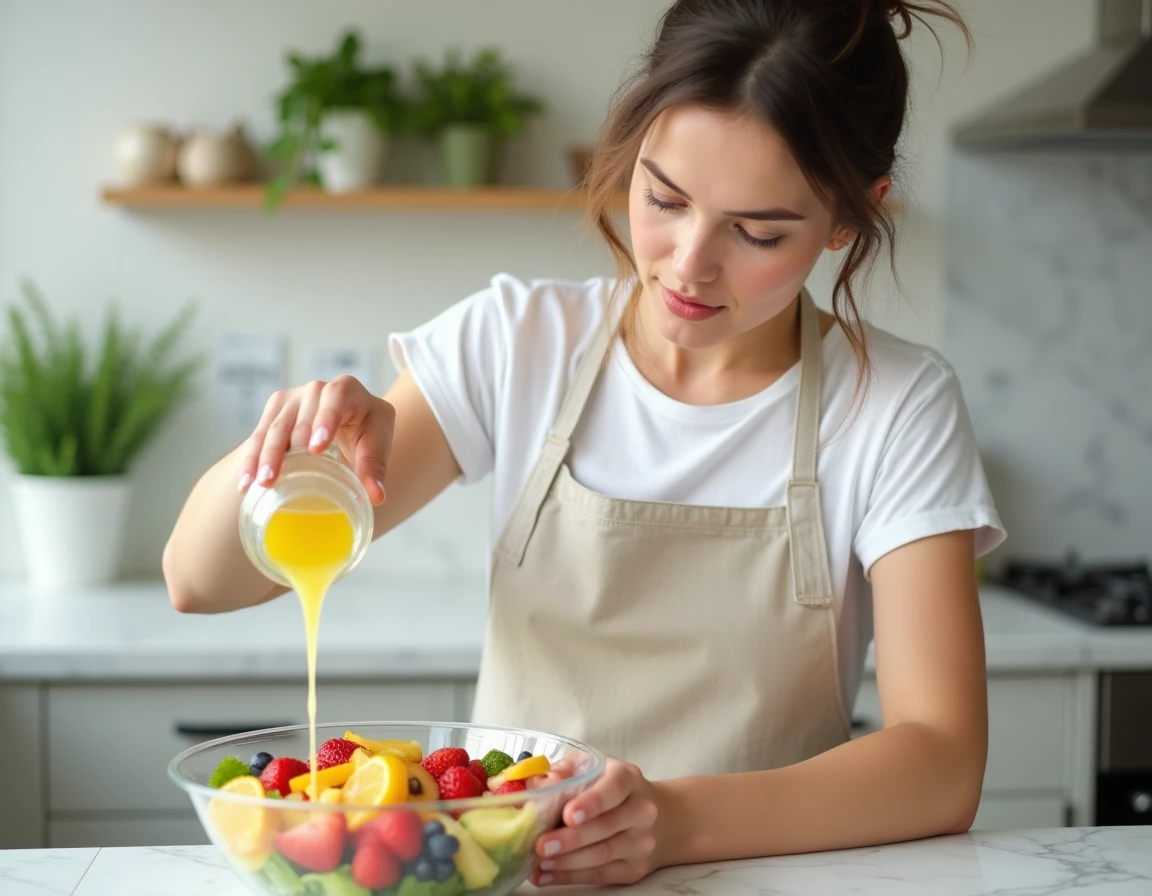
The role of the liquid in a fruit salad goes beyond mere seasoning. It serves three simultaneous functions: providing acidity to slow down oxidation (browning of banana, apple, or pear), adding or not adding sugar, and creating a maceration juice that binds everything together.
An acidic juice like lemon slows down enzymatic browning. A sweet syrup accelerates the release of water through osmosis, making the fruits softer within a few hours. The choice of liquid determines the salad’s shelf life, not just its taste.
To know which juice for fresh fruit salad is best, several parameters must be considered: acidity level, sugar content, aromatic compatibility with the chosen fruits, and the dessert’s longevity.
Comparative table of liquids for fresh fruit salad
| Liquid | Acidity | Added Sugar | Anti-oxidation | Aromatic Profile | Stability after 2 h |
|---|---|---|---|---|---|
| Freshly squeezed lime juice | High | None | Very effective | Crisp, citrus | Good |
| Fresh orange juice | Medium | Natural (fructose) | Moderate | Round, sweet | Fair |
| 100% pure apple juice | Low | Natural (fructose) | Low | Neutral, sweet | Medium |
| Cane sugar syrup | None | High | None | Purely sweet | Softened fruits |
| Light vanilla syrup | None | Moderate | None | Vanilla, round | Softened fruits |
| Orange blossom water (diluted) | None | None | None | Floral, delicate | Good (little osmosis) |
| Aged rum (small dose) | None | Residual | None | Warm, spicy | Good |
Reading the table highlights a clear gap. Only citrus juices combine anti-oxidation and aromatic contribution without adding refined sugar. Syrups, often chosen by reflex, add sweetness but accelerate the release of water from the fruits.
Citrus juices vs. sweet syrups: analysis of taste and texture differences
Pouring lime juice over strawberries, mango, and kiwi produces a very different result than cane sugar syrup over the same fruits. With the citrus, the distinct flavors of each fruit remain separate. Lime acts as a natural enhancer.
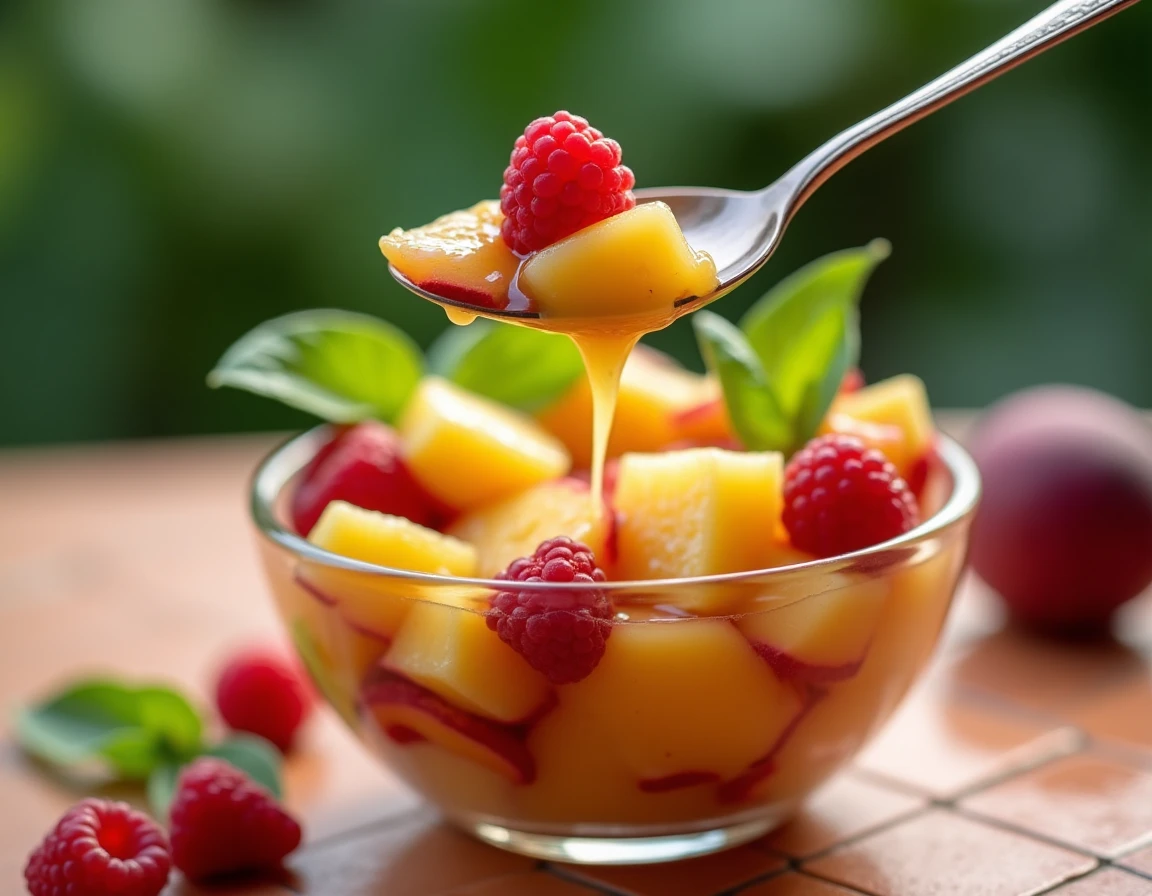
With a syrup, the sugar quickly dominates. Maceration draws water from the fruits through osmosis, diluting the syrup and creating a watery base juice after an hour or two. Pieces of melon and peach lose their firmness faster.
Fresh orange juice offers an interesting compromise: its natural fructose provides subtle sweetness, its moderate acidity partially protects against oxidation, and its aromatic profile pairs well with most summer and winter fruits.
When syrup remains relevant
Light vanilla syrup, in small doses, remains relevant for naturally less sweet fruits (grapefruit, currants, poached rhubarb). In this specific case, it compensates for a lack of sweetness that lemon alone does not correct.
On the other hand, with already ripe and sweet fruits (mango, banana, seasonal strawberry), the syrup becomes unnecessary. It masks the aromas instead of revealing them.
Aromatic liquids for fruit salad: orange blossom, mint, and spirits
Beyond juices and syrups, several aromatic liquids change the flavor direction of a fruit salad without significantly altering its texture.
- Orange blossom water, used at a rate of one teaspoon for four servings, adds a floral note that pairs particularly well with citrus and stone fruits (apricot, peach).
- A cooled infusion of fresh mint, poured as a liquid base, provides freshness without added sugar and works well with melon, watermelon, and strawberry.
- Aged rum, limited to one tablespoon, adds aromatic warmth to exotic fruit salads (pineapple, mango, passion fruit). Star anise or cinnamon infused in a light syrup play a comparable role for autumn salads with pear and apple.
The common point of these liquids: they are used in very small quantities. A few drops are enough to guide the aromatic profile without drowning the fruits.
Pure juice, nectars, and labeling mentions: what the bottle really contains
European regulations strictly govern the mentions on juice bottles. The distinction between “100% pure juice,” “nectar,” and “fruit drink” directly impacts the amount of added sugar in the liquid you pour over your fruits.
A pure juice contains neither added sugar nor added water. A nectar may contain water and sugar or sweeteners. A “fruit drink” generally contains less than half of real juice.
For a fruit salad, pure juice remains the most consistent choice. It provides the taste of pressed fruit without extra sugar. Some brands now offer pure juices enriched with probiotics, a growing trend in the fresh aisle, although their specific benefit in a fruit salad has not been measured.
Pairing the right juice with the right fruits
A pure apple juice, neutral in acidity, works as a subtle base for red fruits. Freshly squeezed orange juice is better suited for mixes including mango, banana, or kiwi. Lime juice remains the most versatile: it adapts to almost all combinations, summer or winter.
The only precaution concerns very delicate fruits (raspberries, blackberries): a juice that is too acidic makes them burst faster. For these fruits, a spoonful of orange blossom or a splash of apple juice preserves them better.
The liquid poured over a fruit salad is not a finishing detail. It is a parameter that affects the total sugar of the dessert, the preservation of the pieces, and the balance of flavors. Freshly squeezed lime juice checks the most boxes for the majority of fresh fruit combinations.