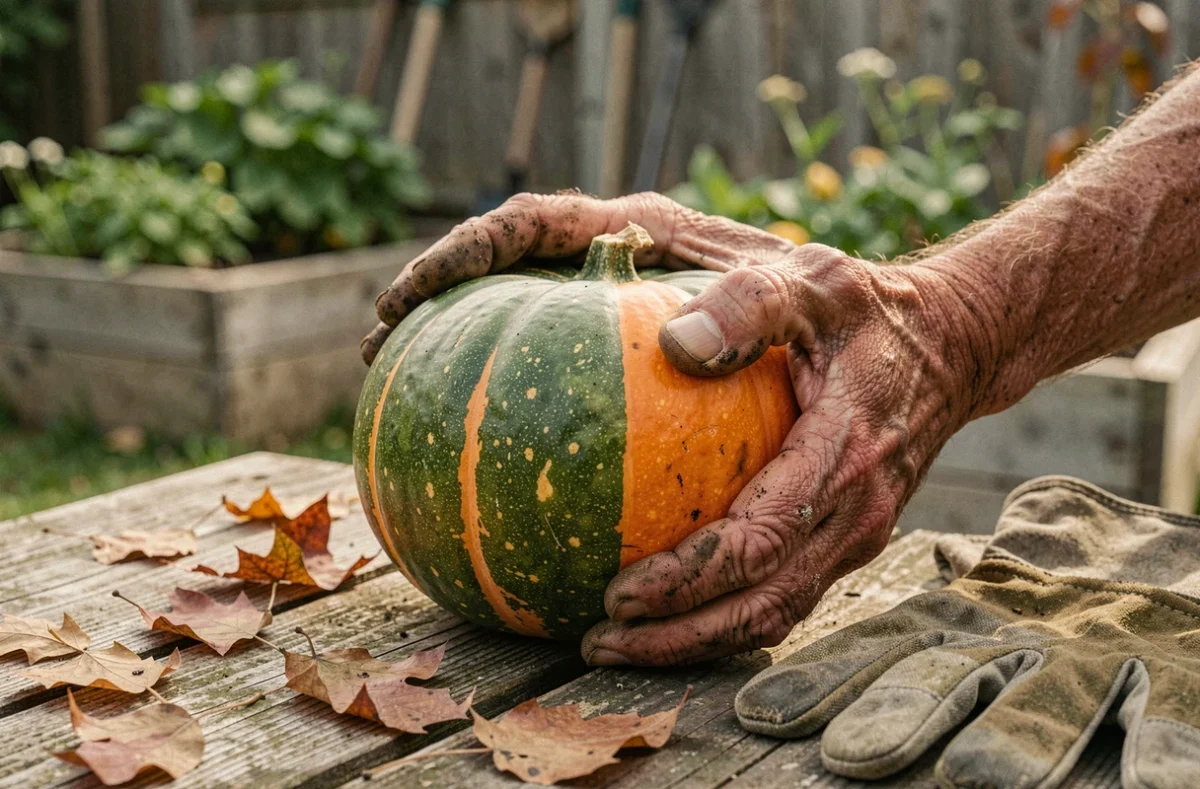
An unripe green pumpkin in late September raises a simple question: is the fruit behind schedule, or does the variety naturally have green skin when ripe? Before looking for solutions, you need to assess the gap between what the plant could produce and what it has actually produced.
Time to maturity, ambient temperature, stem condition and the variety grown are the four factors to consider when making a reliable diagnosis of a green pumpkin that refuses to turn orange.
Pumpkin ripening time: milestones by growth stage
The maturity clock starts at flowering, not sowing. Utah State University Extension puts pumpkin maturation at 45 to 55 days after flowering. Late sowing, flowering delayed by a cool spring, or excess nitrogen that encourages foliage at the expense of flowers will all push this window back.
| Stage | Timing | Effect on color |
|---|---|---|
| Flowering | 6 to 8 weeks after sowing (varies by variety) | Tiny fruit, entirely green |
| Fruit development | 2 to 4 weeks after fruit set | Mostly green; early varieties may begin to change color |
| Ripening | 45 to 55 days after flowering | Gradual shift toward the final color (orange, beige or two-tone, depending on the variety) |
| Full maturity | Stem is dry and woody; rind is hard | Even color; skin resists a fingernail |
When the fruit remains at the “development” stage even though the calendar says it should be ripening, color alone is rarely the problem. A closer look at why a pumpkin is green can help distinguish a simple delay from a variety-related issue.
Green pumpkin at maturity: variety or genuine ripening delay?
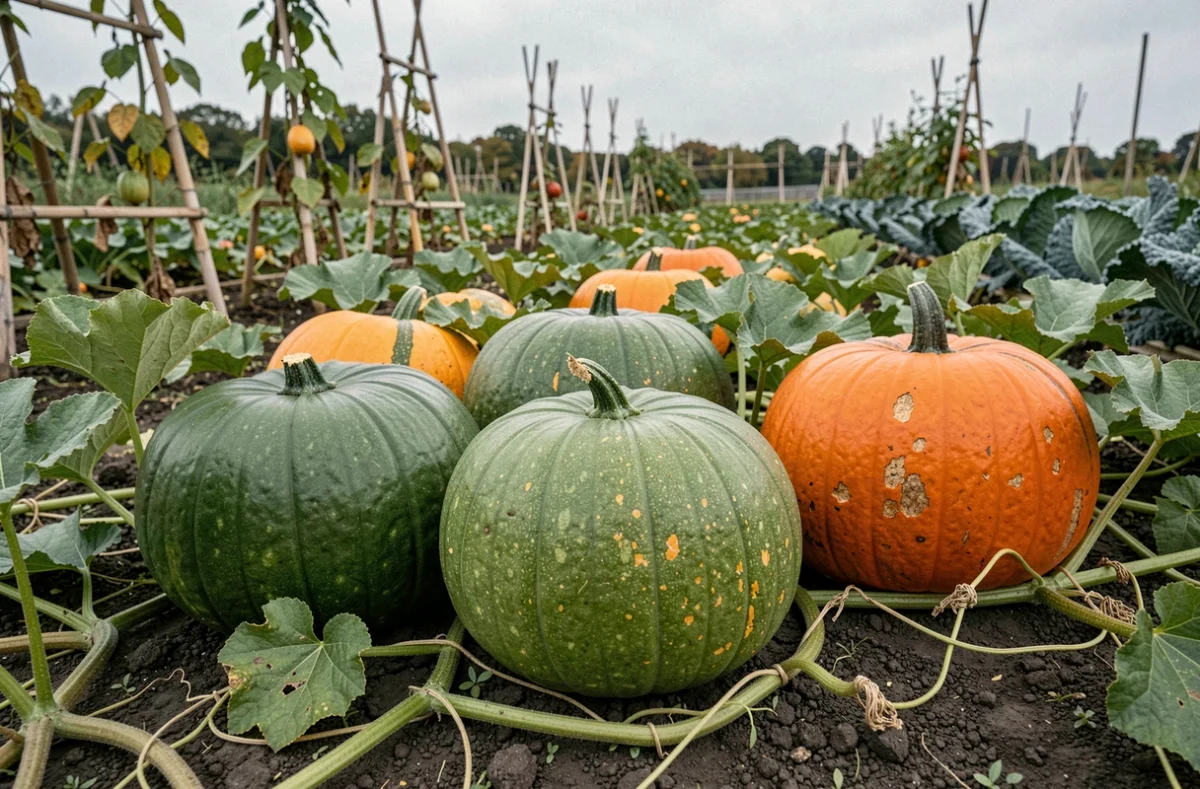
Not all pumpkins turn orange. Some squash in the genus Cucurbita reach full maturity with green, striped or two-tone skin. Washington State University Extension notes that some types of squash have green and white stripes and will never change color, no matter how long they remain in the garden.
Checking which variety you planted is the first step. If the seed packet or plant label names a green variety (butternut, kabocha or certain winter squash), green skin is a sign of normal maturity. In that case, harvest readiness depends entirely on the condition of the stem and the hardness of the skin.
For varieties expected to turn orange (Connecticut Field, Jack O’Lantern, Rouge Vif d’Étampes), a fruit that stays green indicates a genuine delay. The causes fall into three categories.
- Not enough accumulated warmth: pumpkins need consistently warm daytime temperatures for several weeks. A cool summer or a shady spot slows the production of carotenoid pigments responsible for the orange color.
- Flowering too late: sowing after mid-June in northern France rarely leaves enough warm days before the first frosts for the full growing cycle to finish.
- Excess nitrogen fertilizer: nitrogen stimulates vegetative growth. The plant produces foliage instead of directing its resources toward ripening the fruit.
Stem and rind: two reliable tests for the garden
Color can be misleading if you don’t know the variety. Two physical tests give a much more reliable indication of a pumpkin’s maturity, whatever its color.
Stem test
A stem that is still green and flexible indicates that the fruit is continuing to receive nutrients from the plant. When it becomes woody (brown, with a dry appearance and the start of cracking), the fruit has reached physiological maturity. This change usually takes one to two weeks after the skin has reached its final color.
Fingernail test
Press your fingernail against the fruit’s skin. If the rind resists without leaving a mark, the pumpkin is ripe or nearly ripe. Soft skin that scratches easily indicates an immature fruit. This test complements checking the stem and helps settle the question when you’re unsure.
Ripening a green pumpkin: what works and what doesn’t
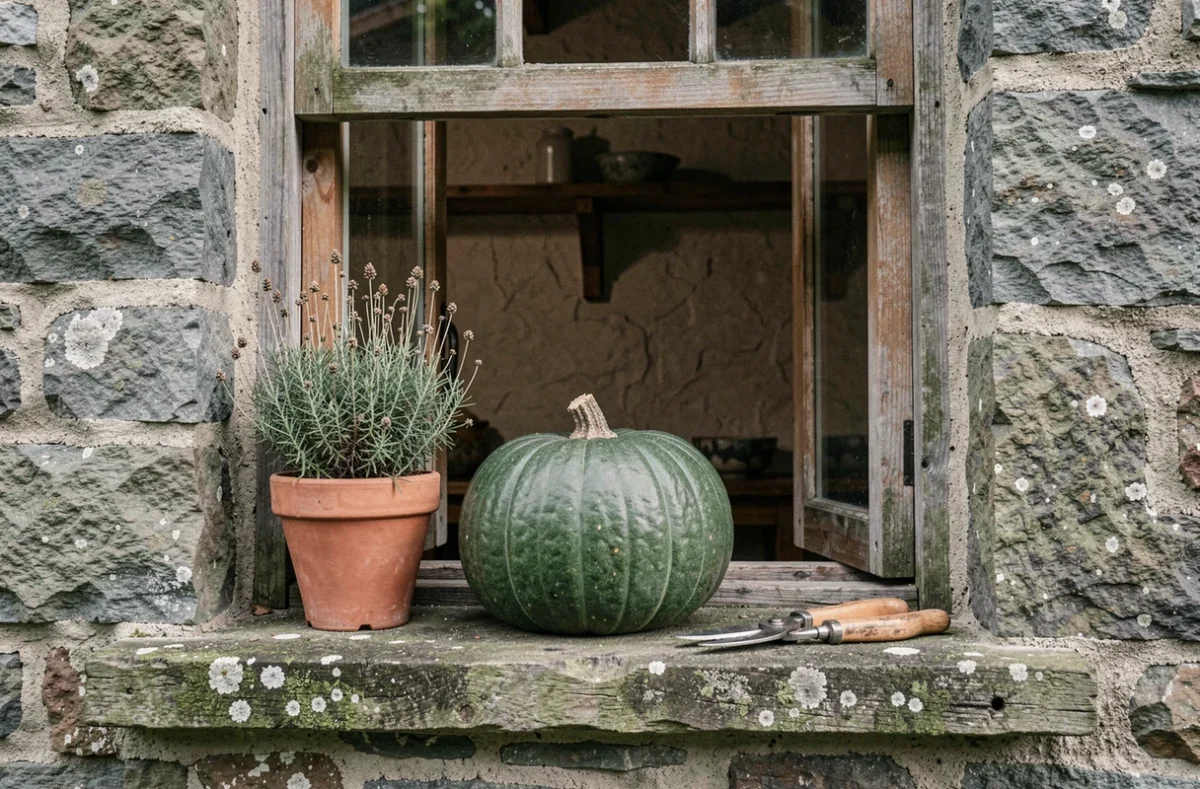
The Fayette County Newsletter from Iowa State University Extension classifies squash as vegetables that do not continue ripening after harvest. An immature fruit may soften or rot, but it will not produce more sugars after picking. Post-harvest curing (dry storage at around 20 to 25 °C for one to three weeks) hardens the rind and improves storage life, but it will not turn a green fruit into a ripe pumpkin.
This distinction changes your approach. If the fruit is still on the plant and frost is approaching, several steps can speed up ripening on the vine.
- Remove new flowers and small fruits that won’t have time to ripen, so the plant can focus its energy on fruit that has already formed.
- Set up a cloche or thermal fleece to gain a few degrees and protect the foliage from early frost (active foliage continues to nourish the fruit).
- Place a board or mulch under the fruit to insulate it from cold soil and reduce the risk of rot from contact with damp ground.
By contrast, the idea of placing apples or bananas near pumpkins to release ethylene and speed up ripening is a myth when it comes to cucurbits. Pumpkins do not respond to ethylene in the same way as tomatoes or avocados.
Post-harvest curing: hardening, not ripening
If frost is threatening and the fruit already has a partly dry stem and a rind that is beginning to harden, it can still be harvested. Curing it in a dry, well-ventilated place at 20 to 25 °C, with the stem left intact, allows the rind to finish becoming woody. A small, entirely green fruit with a soft rind will not catch up under these conditions.
The decision comes down to one threshold: a well-developed fruit whose rind is beginning to resist a fingernail is worth curing. A clearly immature, small and soft fruit is better composted or used straight away in the kitchen (soup, purée) before it rots.